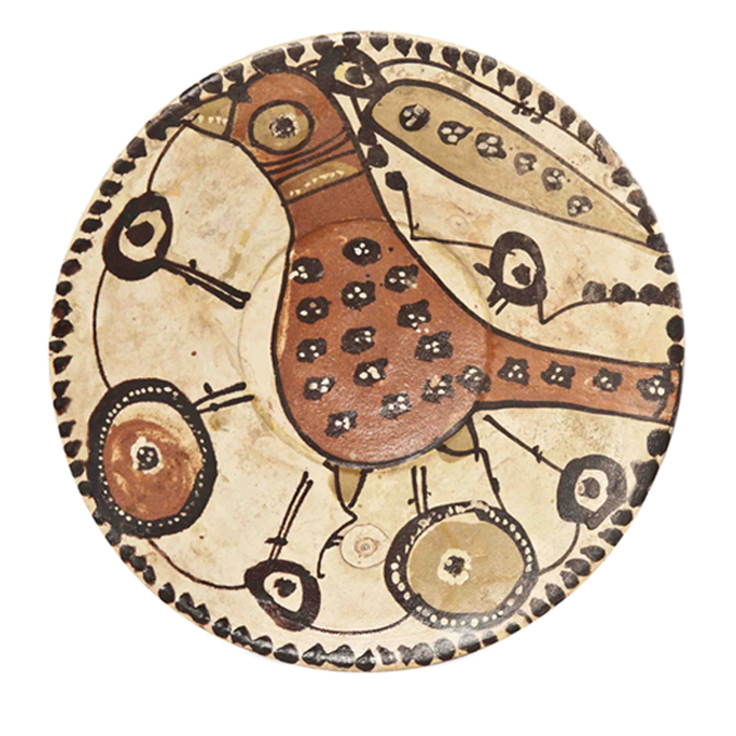
NISHAPUR BIRDS
-
Ancient Persia
Bird motifs adorned everyday ceramics, combining artistry with symbolism
-
Myth & Migration
Stylised birds captured movement, narrative and spiritual meaning across centuries
-
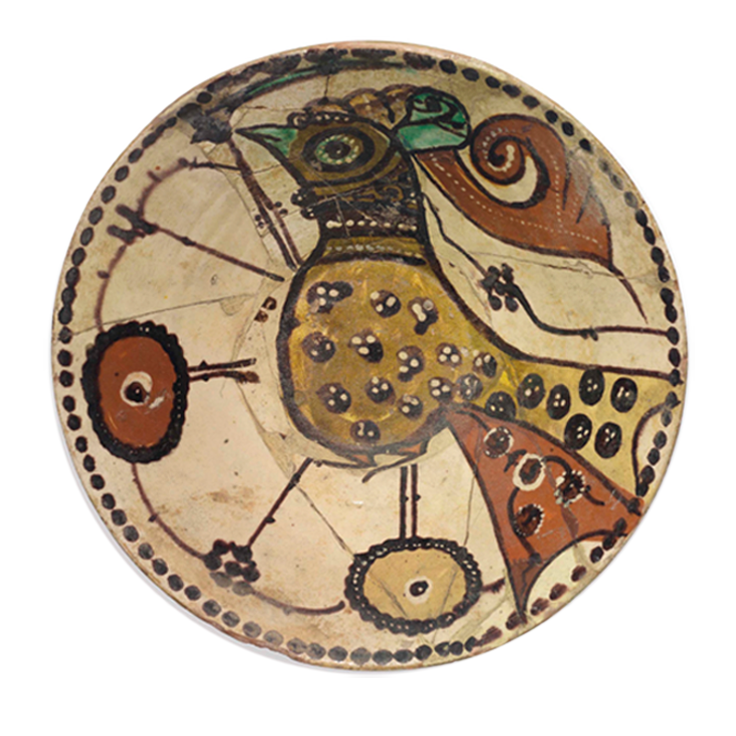
Avian Craft Heritage
Disciplined placement and confident lines demonstrate clarity and timeless design
In 9th and 10th century Nishapur (in present-day Iran) ceramicists painted birds onto white slip-glazed plates with bold, assured strokes.
The birds were never naturalistic. They were stylised, graphic, reduced to essential lines and confident curves. Often they were framed by calligraphy or geometric patterns, merging artistry with symbolism.
These were everyday objects, yet they carried profound meaning: protection, good fortune, movement, life. Their enduring power lies not in ornamentation, but in clarity—a single bird, placed decisively at the centre, becomes a statement of precision and intention.
A single bird, placed decisively at the centre.
Ipakshi draws from this structural elegance, not by imitation, but by principle:
Disciplined placement of patterns and symbols.
Harmony between utility and artistry.
The Nishapur birds teach restraint. They are decorative, yet never cluttered. Ancient, yet modern in their graphic strength.
Nishapur was also the birthplace of Attar, the author of The Conference of the Birds. This discovery deepened Ipakshi’s philosophy: birds are not only beautiful, they are carriers of story, structure, and enduring wisdom.
Explore the Connection: